Common Basil Growing Mistakes UK Gardeners Make
Basil has a reputation for being difficult, and most of that reputation comes from a handful of avoidable mistakes. The plant is not fussy in the way people imagine. It comes from a warm, bright, well-drained place and it objects to being kept cool, wet and cramped. Get those three things right and a supermarket pot on a kitchen windowsill will keep cropping for months. Get them wrong and you will watch it collapse in a fortnight, usually with no obvious warning.
Overwatering, and watering in the wrong place
Overwatering is the single most common way to kill basil in the UK, and the symptoms are easy to misread. The leaves droop, so you water again, and the compost becomes a soggy, airless block. Roots need oxygen as much as moisture, and when they sit in saturated compost they rot from the bottom up. Lower leaves yellow, stems soften near the compost line, and small clouds of fungus gnats appear.
Water only when the top two centimetres of compost are dry. Push a finger in rather than judging by the surface, which can look dry while the base is soaked. Water in the morning so any splashes on the leaves dry during the day, and pour onto the compost rather than over the foliage to reduce the risk of mildew. Always use a pot with drainage holes, and tip away whatever collects in the saucer after ten minutes.
What about those supermarket pots?
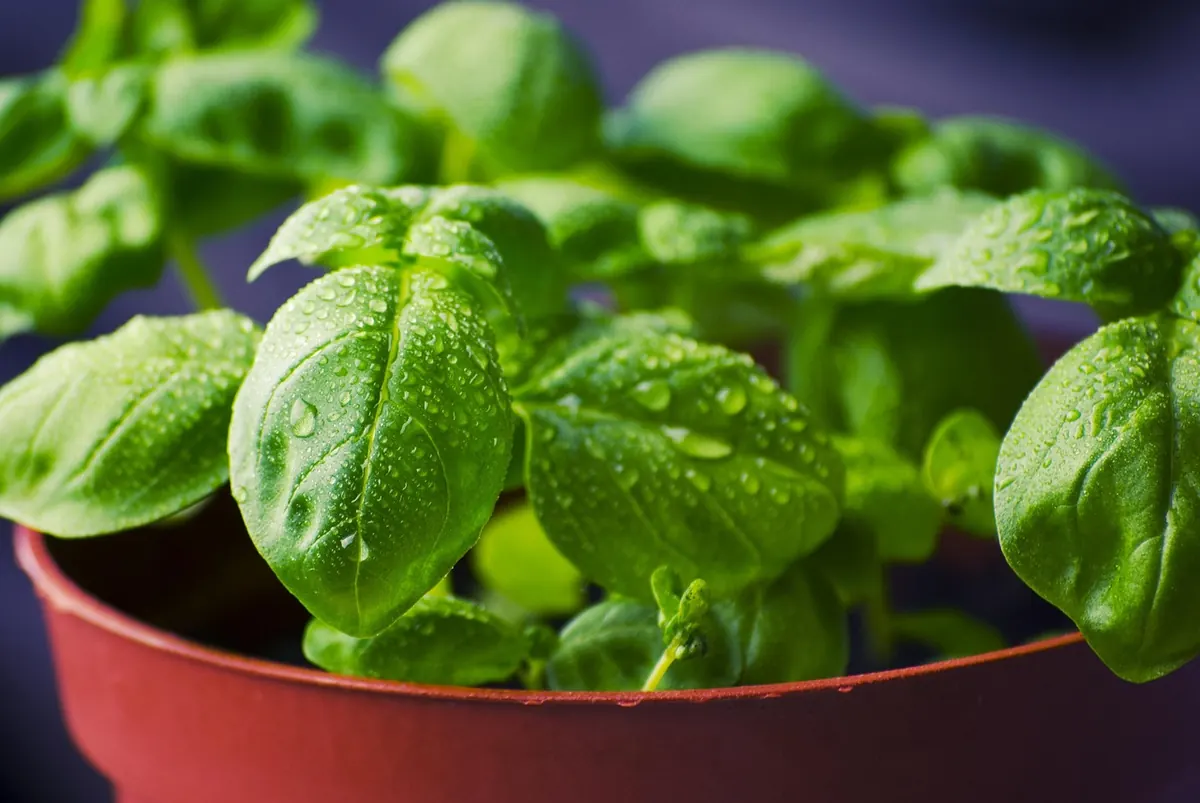
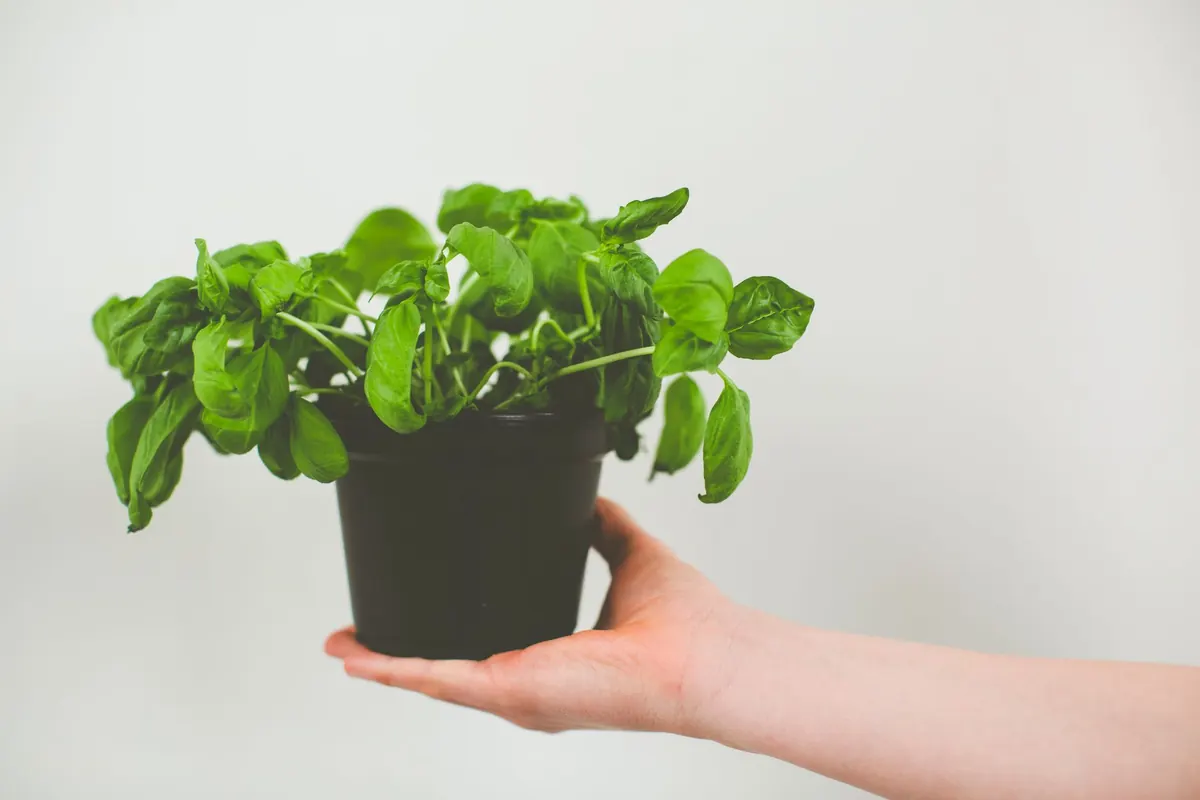
They are usually several seedlings crammed together in compost that has been kept wet in transit. If you do nothing else, move them into a slightly larger pot with fresh compost and give them a bright spot. Left as they are, they will sulk, yellow and fade within a couple of weeks.
Sowing too early, then giving plants cold shock
Basil is tender. It germinates best in warm compost, around 18–20°C, and it hates cold, wet soil. Sowing in March on a chilly windowsill, or planting out in May while nights are still in single figures, is asking for trouble. Growth stalls, leaves curl, and the plants never quite recover their momentum.
- Sow indoors from April, ideally in a propagator or under a clear bag on a warm sill.
- Plant out from late May in the south and June elsewhere, once nights are reliably above 10°C.
- Harden plants off over a week: a few hours outside in shade, then longer spells, then a full day.
- Use room-temperature water. Straight from a cold tap in a cold kitchen gives seedlings a shock.
Sowing far too thickly, then failing to thin
Basil seed is cheap and germinates well, so a pinch in a pot quickly becomes a carpet. Crowded seedlings compete for light, air and nutrients. They stretch, weaken, and become far more prone to damping off, where seedlings collapse at compost level almost overnight.
Thin when the first true leaves appear — the second pair, after the rounded seed leaves. Snip the extras off at compost level with scissors rather than pulling them, which disturbs the roots of the plants you are keeping. Aim for 4–5cm between plants in a pot, or prick seedlings out into individual 7–9cm pots, holding them by a leaf and never by the stem.
Choosing the wrong pot and the wrong compost
Both extremes cause problems. A tiny seedling in a 20cm pot sits in a huge volume of wet compost with its roots nowhere near the edges, which is a recipe for rot. A mature basil in an 8cm pot dries out twice a day, and its roots circle the base, stalling growth.
Move plants up in steps: a 7–9cm pot, then 12–15cm, then a 20cm pot or a larger trough once the plant is bushy. Terracotta looks lovely but dries faster than plastic, so check it more often. Any pot must have holes in the base. Garden soil in a container sets like concrete and drains badly; use a peat-free multipurpose compost with a little grit or perlite mixed through it.
Giving it too little light
A leggy, pale basil with long bare stretches between leaf pairs is almost always short of light. Basil wants at least six hours of direct sun. A north-facing sill, or a spot well back from the window, will not do, however warm the room feels. Turn pots a quarter turn every few days so plants grow evenly instead of leaning towards the glass.
Forgetting to pinch, and feeding too eagerly
Let a basil flower and leaf production slows sharply while the plant puts its energy into seed. Pinch out the growing tips regularly — take the top pair of leaves and the growing point just above a leaf node — to keep plants bushy and productive. Remove flower spikes as soon as you see buds.
Feeding is a smaller mistake in the opposite direction. Too much and you get soft, lush growth with diluted flavour. Once plants are established in decent compost, a weak liquid feed every fortnight is plenty. Never feed a dry plant; water it first.
A quick fix checklist
- Yellow lower leaves, soggy compost: stop watering, check the drainage holes are clear.
- Drooping even though the compost is damp: likely root rot. Repot into fresh, barely moist compost and trim any black roots.
- Long bare stems and small pale leaves: move to a sunnier spot and pinch the tips.
- Seedlings collapsing at the base: damping off. Improve airflow, water less, thin out.
- Roots circling the pot: move up one size, no more than that.
Keeping the crop going
The best answer to most basil problems is to sow little and often. A small pot sown every three or four weeks from late spring into midsummer gives you a steady supply instead of a single glut followed by bare windowsills. Harvest from the top down, cutting whole stems just above a leaf pair rather than stripping individual leaves, and the plant will branch and refill.
If you want basil through the winter, lift a healthy plant into a pot before the first cold nights and bring it indoors to the brightest sill you have. Expect slower growth and water far less than you did in July. Basil is not hard to grow. It simply tells you quickly when something is wrong — and nearly every time, that something is water, cold or light.
Photo: Markus Spiske / Pexels